Monday, July 28, 2014

Lessons from YW Camp 2001

In 2001, I was serving as a high councilor in the Orem Canyon View stake. I had been assigned as the stake representative to the Young Women — a wonderful responsibility!  We prepared through the year for the annual Young Women Camp, and had been assigned to a week in August at Camp Mia Shalom, where we had attended many times.  During this year, however, the summer was hot and dry, and the water supply at Shalom ran low.  We would have to bring in water for all our needs — a challenging task. We looked for alternatives, and found one option: Camp Bennion, several miles up Spanish Fork canyon. It had water and some good options for activities and was closer to home. It was, however, a tent camp — no cabins — providing a different experience for the young women, and their leaders! But there was a lot of enthusiasm for the new setting.

As the high council representative, I had the privilege to spend the whole week at the camp with the young women and their leaders.  During the course of the week, there were some wonderful experiences, as always.  But three specific lessons that came to me personally have lingered in my mind in the years that have passed; in fact, they always come back to mind when I drive down Spanish Fork Canyon. I decided it was time to record them. I'll list them in the reverse order of when they occurred.

Sunday, April 20, 2014

To drink of the cup

In the deserts of Palestine a few thousand years ago, Jesus completed His final ministry in the area known as Perea and started to make His way towards Jerusalem for that last week of His life.

As He journeyed with a group of His disciples, Matthew records an interesting interchange.  One of the women approached Jesus.  She was the mother of James and John, the sons of Zebedee.  She asked the Master what seems to us to be a rather presumptuous and impudent question:
Grant that these my two sons may sit, the one on the right hand, and the other on the left, in thy kingdom.
We infer from her words that she probably had the common misconception about the Savior's kingdom being an earthly one, that His power would be political, and His rise to power imminent.  It probably also shows a little bit of what I think is in every mother, a hope and desire that her sons will "turn out," will be successful and special.

Jesus could have responded with a lecture, or a rebuke, or have even ignored her naïveté.  But His words are sensitive and thoughtful:
Ye know not what ye ask.

Saturday, April 19, 2014

"An angel, strengthening..."

The synoptic Gospels describe the event that is, for Latter-day Saints, the focal point of the Easter Week. Following the Last Supper with his disciples, as darkness falls, the Savior makes his way to a garden called Gethsemane—nearby but outside the walls of Jerusalem.  There, the Savior asks his disciples to watch and wait, and he goes on alone to pray.  Luke mentions that at one point, an angel comes to console and encourage the suffering Lord.

In 2011, the BYU Museum of Art arranged for an exhibit of many of the paintings of Carl Bloch, the gifted 19th century Danish artist.  They were beautiful to see.  One in particular seemed to really "speak" to me, and I spent a long time (during several visits) studying it and feeling the power of its message.  It's titled "Gethsemane."

Thursday, February 27, 2014

'Tis sweet to sing the matchless love...

For the 9 1/2 years I served as a counselor in our stake presidency, the demands of the calling required that I sacrifice a number of personal interests and activities.  One of those was singing in choirs.  Since my release last fall, it's been a joy to return to my love of music.  I've not only resumed participating in the ward choir, but also joined a community singing group, "The Orem Chorale," that challenges and inspires even more with very beautiful music and a talented, professional director.

When I was a young boy, my mother encouraged me to join with her in being a part of our ward choir.  She had always loved to sing, and wanted me to experience that too.  I don't recall other boys or men who were in the choir; I do remember a dominant soprano with some professional training who outsang the rest of the amateurs (don't most ward choirs have one of those??).
Parker, Idaho Ward Choir - 1900
OK, maybe we weren't THAT old-fashioned.  But it does seem like a LONG time ago.

Sunday, February 2, 2014

True Believers in Christ

On two occasions, prophets in the Book of Mormon use a phrase that has always fascinated me — "true believers in Christ" (Alma 46:14-15, 4 Ne 36-7).

The use of the adjective "true" always makes me wonder.  Why didn't Alma and Nephi just talk about "believers in Christ"?  Are there believers who are not true believers?  Why was it significant to add that qualifier?

I pondered what other kinds of believers might be distinguished from the "true" ones; here are some alternatives that came to mind.  I've seen examples of these characteristics in people I've known, or from tendencies I've noticed in my own life at times:

Sunday, January 26, 2014

The bright and morning star

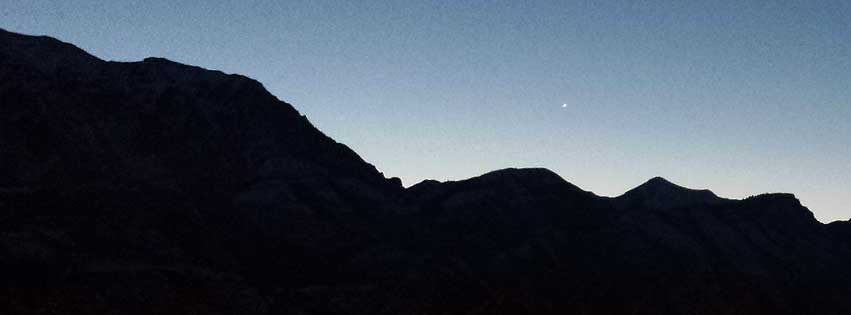
Recently as I returned from an early-morning hike just at dawn, I looked to the east and saw a simple, but beautiful sight — a single bright star shining in the eastern sky, defying the increasing sunlight.  I watched for a while until it lost the battle and faded from view.


Of course, it wasn't a star at all; it was the planet Venus, known in this phase of its orbit as "the morning star." I was thrilled to notice it this week in its morning phase, because of the symbolism it evokes.  It will be visible for several more months in the morning sky, then will "disappear" behind the sun in late summer, to reappear at the end of the year as "the evening star."
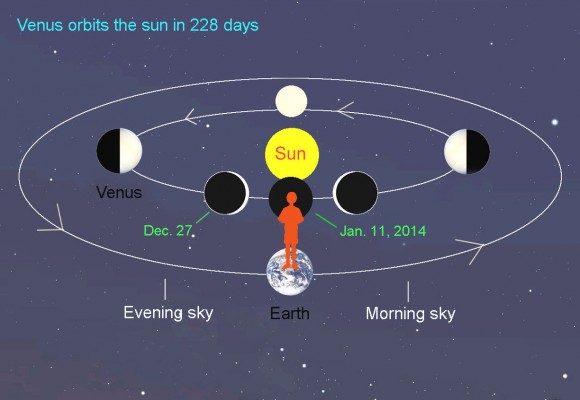
Because Venus is closer to the sun than Earth, and has a 225-day "year" (orbit around the sun), it sometimes appears in the morning and sometimes in the evening.  When it's on the "trailing" side of the sun, it appears in the evening sky coming into view as the sun sets — the "Evening Star."  When its orbit takes it to the other side, it "leads" the sun in the morning, appearing in the sky for an hour or two before dawn — the "Morning Star."  Ancient observers thought these two manifestations were different celestial bodies; the Greeks called the morning star Phosphoros, “the bringer of light,” and the evening star Hesperos, “the star of the evening.”

Tuesday, January 21, 2014

Three thoughts from Eliza R. Snow

Engraving from 1884, age 80
Eliza Roxcy Snow was among the most renowned women of the LDS Church in the 19th century, recognized for her leadership, teaching, and especially for her poetry. She was the older sister (by 10 years) of Lorenzo Snow, who would become the Church's 5th president. She directed the re-establishment of the Relief Society after the Church moved to Utah.  She was sealed to both Joseph Smith and Brigham Young.  On the 210th anniversary of the birthday (January 21, 1804) of this remarkable woman, I share three insights she provided.